
Navigating DWTC Height Rules for ATM 2026
The DWTC stand height regulations are a critical compliance factor for every exhibitor planning for Arabian Travel Market (ATM) 2026 at Dubai World Trade Centre (DWTC). ATM runs from May 4–7, 2026, typically occupying Sheikh Saeed and Za'abeel halls, hosting roughly 40,000–55,000 attendees and more than 2,800 exhibitors. Understanding the 4.0m maximum, reclassification triggers, material and access rules up front prevents last‑minute redesigns, fines and on‑site rework.
Understanding DWTC stand height regulations
Maximum height & Complex Structure reclassification
DWTC applies a standard maximum height of 4.0m for 'Space Only' shells. Any design element exceeding 4.0m is reclassified as a Complex Structure. That reclassification incurs:
- Requirement for certified structural engineering drawings stamped by a UAE‑licensed structural engineer.
- Longer approval lead times with the venue and additional inspections during build.
- Extra inspection and processing fees charged by DWTC.
Designers who advertise double‑decker or 6.0m island concepts without factoring in this rule often face costly last‑minute redesigns or penalties. If you are considering any footprint or vertical feature above 4.0m, plan for the Complex Structure process from day one.
Material, fire and access requirements
- B1 fire‑rated materials are mandatory for visible finishes and many internal components. Relevant fire certificates and material data sheets must be submitted with the approval package.
- Any raised floor above 12mm requires a wheelchair‑accessible ramp. Best practice is to design ramps to meet a comfortable gradient (commonly 1:12) and provide handrails where practical, but confirm slope with DWTC’s technical guidelines at time of submission.
- DWTC enforces strict site‑access accreditation for contractors — all fit‑out teams must be pre‑registered and approved to access halls and loading docks.
- On‑site crate and storage space is restricted; DWTC forces many exhibitors to use off‑site logistics and staged deliveries to avoid blocking fire routes and aisles.
Common pitfalls exhibitors face at ATM 2026
- Assuming international builders can deploy double‑deck islands without reclassification: we regularly see 6.0m concepts fail DWTC checks.
- Relying on on‑site finishing and wet trades — this increases the risk of non‑compliance with B1 finishes and causes delays.
- Underestimating approval timelines for Complex Structures and engineering submissions.
- Failing to plan for off‑site storage and staged delivery, leading to bottlenecks during build‑in.
How Burdak Technical Services mitigates DWTC risks
With 11+ years executing at DWTC and ADNEC, we have institutional knowledge of DWTC’s technical and operational expectations. Our approach reduces risk, shortens approvals and eliminates on‑site surprises:
- In‑house fabrication: We control fabrication timelines and quality with our own workshop, avoiding dependency on third‑party suppliers.
- CNC precision joinery: Repeatable accuracy reduces on‑site adjustments and ensures components fit perfectly during rapid install windows.
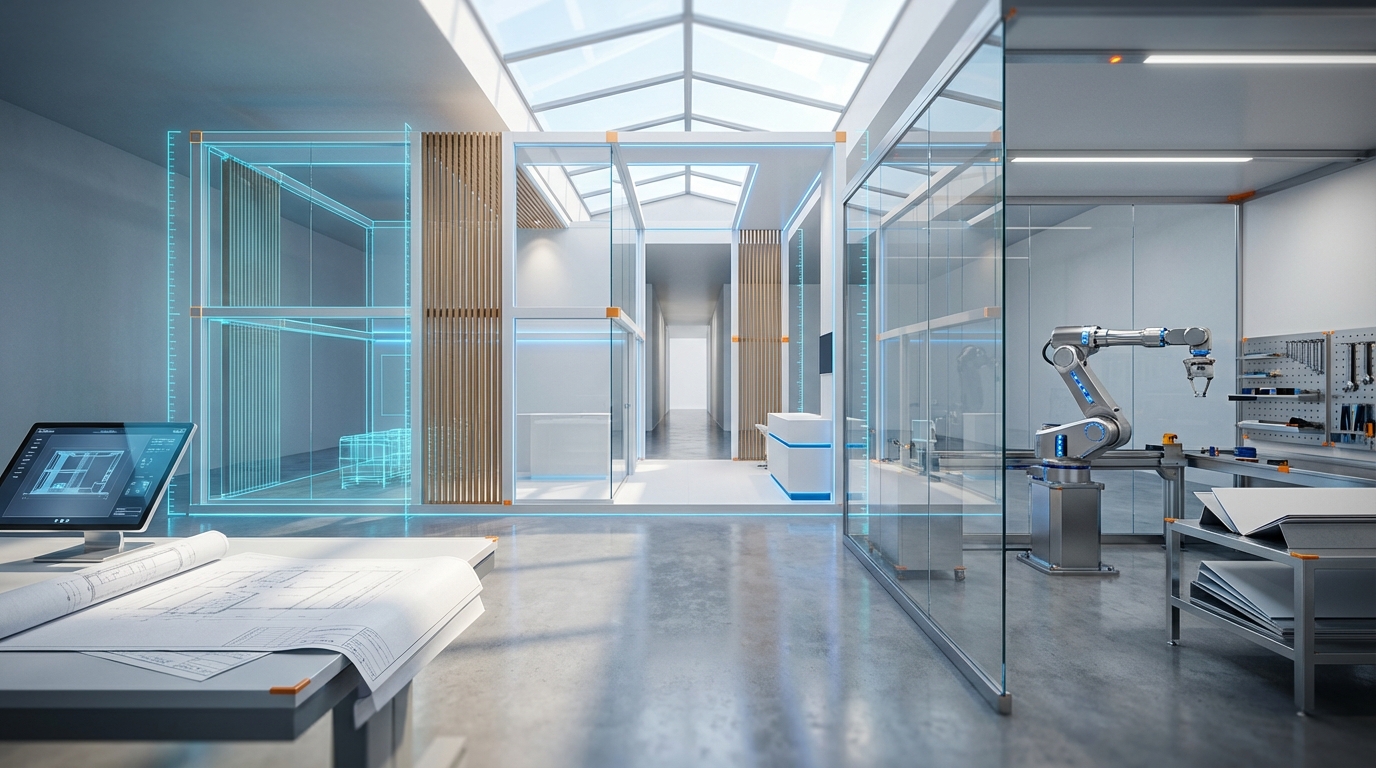
- Full‑scale 3D mockups and pre‑assembly: We build full‑size mockups off‑site to validate clearances, sightlines and compliance (especially for features approaching the 4.0m limit).
- Pre‑certified modular components: where clients prefer sustainable, repeatable stands we provide aluminium reusable frames and pre‑approved panels to minimise DWTC review friction.
- Established venue relationships: our history with DWTC shortens query cycles and helps secure timely approvals for compliant designs.
Why these services matter
Using in‑house fabrication and pre‑assembly means fewer unknowns on installation day. For example, by delivering CNC‑cut components and a pre‑assembled 3D mockup we can demonstrate compliance to DWTC technical teams before shipping, avoiding the rework common with low‑cost builders who finish elements on site.
Practical compliance steps & timeline for ATM 2026
Start planning early and follow a disciplined approval checklist. A practical timeline (recommended) is:
- -12 to -10 weeks: Lock concept and check whether any element exceeds 4.0m. If yes, engage a UAE structural engineer immediately.
- -10 to -8 weeks: Prepare material certificates (B1), engineering drawings and contractor accreditation paperwork.
- -8 to -4 weeks: Submit drawings to DWTC for review. Build pre‑assembly mockup and test accessibility ramps and sightlines.
- -4 to 0 weeks: Finalise logistics, confirm off‑site storage and staged deliveries, and secure site access passes for fit‑out crew.
- On‑site build: Use pre‑assembled modules and CNC components to minimise on‑site finishing. Have paperwork ready for DWTC inspections.
Note: Complex Structures commonly require an extended approval window — allow additional time and budget for DWTC inspections and engineering fees.
Modular & circular‑economy approaches that win repeat business
At ADNEC and increasingly at DWTC, reusable aluminium frames and pre‑certified components are a market differentiator. Benefits include:
- Faster approvals when materials and connections are pre‑certified.
- Lower lifecycle cost and faster install/removal cycles.
- Better compliance control — modular panels can be B1 rated at source.
Burdak offers modular solutions with documentation to speed DWTC technical reviews and to protect your budget across multiple shows.
FAQ
- Q: What is the maximum stand height at DWTC for ATM 2026?
A: The standard maximum for 'Space Only' is 4.0m. Anything above is treated as a Complex Structure and requires certified structural drawings and extra approvals.
- Q: Are specific materials required?
A: Yes — DWTC enforces B1 fire‑rated materials for visible finishes and many internal substrates. Certificates must be submitted.
- Q: Do raised floors need ramps?
A: Any raised floor over 12mm requires wheelchair‑accessible ramps. Include ramp details with your technical submission.
- Q: Will DWTC allow on‑site storage of crates?
A: Site storage is restricted. Most exhibitors must use off‑site logistics and staged deliveries — plan accordingly.
- Q: How can Burdak help me avoid rework or penalties?
A: We provide in‑house fabrication, CNC precision joinery and full‑scale 3D mockups to validate designs before shipment. Our local experience and venue relationships reduce approval friction and on‑site surprises.
Preparing for ATM 2026 means understanding the DWTC stand height regulations and building a timeline that accounts for reclassification, engineering and venue inspections. Contact Burdak Technical Services early — our team will review your concept, advise on Complex Structure risks, and deliver compliant, pre‑assembled stands that save time and protect your budget.