Pass ADNEC's Better Stands Audit Before ADSW
Why ADNEC Better Stands compliance Matters for ADSW Exhibitors
ADNEC Better Stands compliance is mandatory for space-only stands at Abu Dhabi Sustainability Week (ADSW). ADSW runs 11–15 January 2026, with the World Future Energy Summit exhibition days on 13–15 January at ADNEC. With 450+ exhibitors and 50,000+ professional attendees expected, failing the Better Stands audit risks severe costs: late-working fines (reported from AED 4,000/hr), waste-removal penalties, forced on-site remediation, and the reputational risk of being labelled “Disposable” or excluded from future trade shows.
The Material Passport Explained — ADNEC Better Stands compliance
The Material Passport is the technical declaration ADNEC requires to demonstrate a stand’s lifecycle planning, reuse and low-impact materials. It must accompany RAMS and structural calculations and is typically due 30–45 days before the show (industry guidance targets mid-December 2025 for ADSW 2026).
What to include in the Material Passport
- Bill of Materials (BOM): itemised line-items with quantities, dimensions, weights and unique IDs for every component.
- End-of-life destination: planned reuse, refurbishment, recycling stream (e.g., timber reuse, MDF recycling, panel return to supplier).
- Certificates: low-VOC paint/adhesive certificates, LED lighting datasheets, and formal declarations of reuse percentages.
- Fire and safety: fire test reports and evidence that finishes meet ADNEC fire-class requirements.
- Photos & drawings: photos of sample components, DWG/shop drawings and tagged photos showing serial/lot numbers.
- Customs & logistics references: HS codes, reusable asset declarations and serial numbers to match customs paperwork on arrival/departure.
ADNEC tier criteria (Bronze / Silver / Gold)
- Bronze: Basic BOM, documented low-VOC paint/adhesives, LED lighting and a minimal reuse plan (e.g., 30% of materials reusable).
- Silver: Full Material Passport with detailed end-of-life destinations, reuse targets (typically 50–70%), and verified certificates.
- Gold: Factory-verified BOM, 70%+ reuse or clearly demonstrable circularity routes, low embodied-carbon claims and manufacturer take-back agreements.
The Real Exhibitor Pain Points — ADNEC Better Stands compliance
We frequently see three recurring issues that trigger audit failures and costly remediation:
Common operational pain points
- Time pressure: Compressed submission windows make mid-December deadlines critical. Late submissions often result in rejection or heavy late-working penalties.
- Customs mismatch: Reusable assets must match customs paperwork. If serial numbers or HS codes don’t align with the Material Passport, assets can be confiscated or charged as waste.
- Documentation gaps: Missing low-VOC certificates, absent fire reports or BOM granularity (e.g., “timber panels” vs. “aluminium-framed painted MDF, 2400x1200x18mm, 12kg”) are typical causes of on-site remediation.
Quantified impact of common failures
- On-site remedial painting or re-certification: AED 4,000+/hr plus material costs.
- Waste removal for non-compliant materials: uplifted disposal fees and potential public classification as non-compliant.
- Lost booth fit-out time: delayed sign-off can reduce exhibitor access to the stand for final QA by 24–72 hours.
A Practical 6‑Week Compliance Checklist — ADNEC Better Stands compliance
Start 6 weeks out (mid-December target). We recommend this step-by-step schedule to meet ADNEC deadlines and avoid penalties.
- Week 6: Design sign-off
- Finalise stand design and confirm modular strategy and reuse targets.
- Lock material specs (type, finish, VOC datasheets) and assign component IDs.
- Week 5: Technical documentation
- Submit RAMS and structural calculations to your engineer; collect engineer sign-offs.
- Produce DWG/shop drawings and parts list from the design package.
- Week 4: BOM & Material Passport assembly
- Complete the BOM with item dimensions, weights and end-of-life destination for each component.
- Gather low-VOC certificates, fire test reports and LED datasheets.
- Week 3: Sample verification
- Produce sample panels and finishes; obtain third-party or supplier certificates where required.
- Run a factory mock-up or pre-assembly to confirm fit, finish and reusability.
- Week 2: Logistics & customs sequencing
- Confirm freight windows, marshalling booking and staged labelled deliveries.
- Match customs paperwork to serialized reusable assets and BOM entries.
- Week 1: Final submission & contingency
- Submit the Material Passport, RAMS and structural calcs to ADNEC and retain proof of submission.
- Prepare contingency funds and on-site team for rapid remediation if necessary.
How Burdak Solves It — ADNEC Better Stands compliance
We turn compliance from a risk into a commercial advantage. Burdak Technical Services provides:
- In-house fabrication: Full manufacturing in Abu Dhabi reduces lead times and ensures the BOM and component IDs match factory records and customs paperwork.
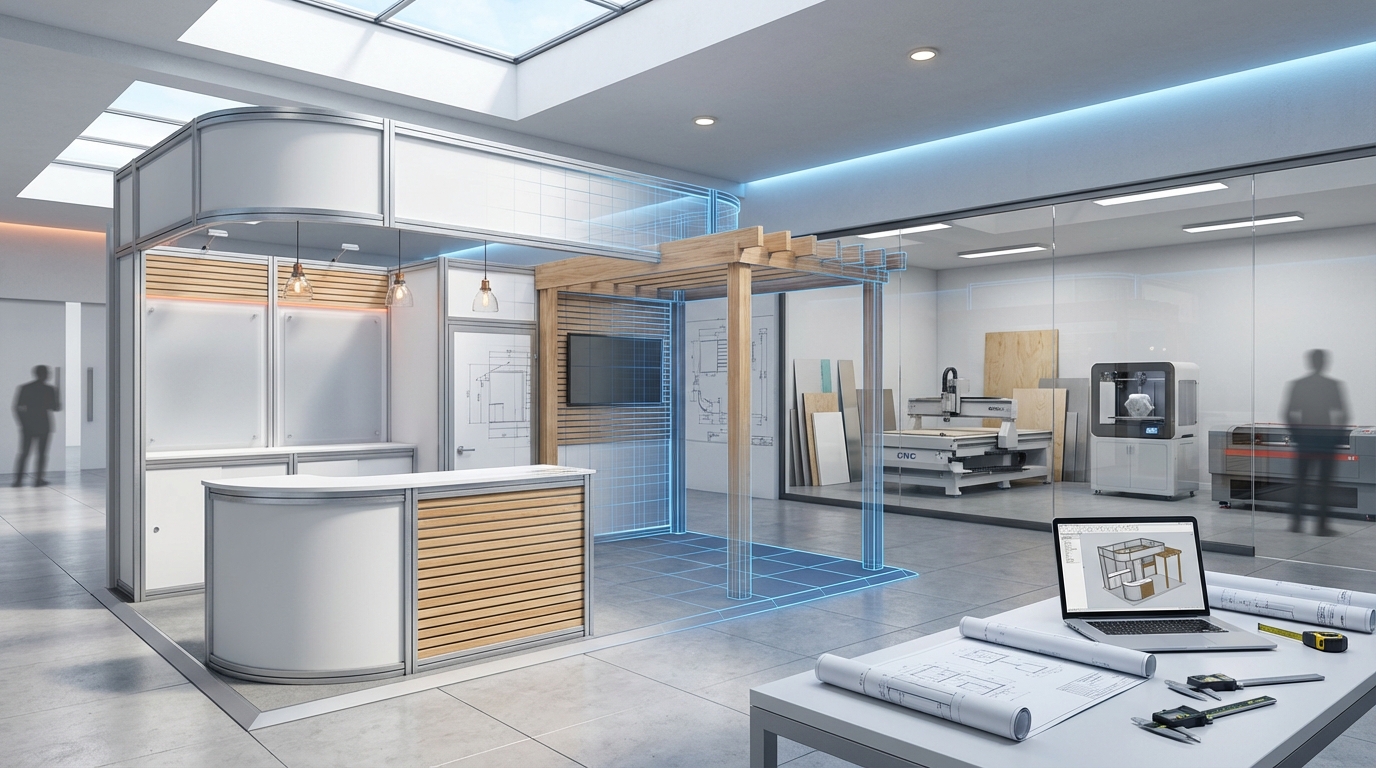
- CNC-precision joinery: Consistent parts, labelled and serialised for easy inspection and reuse.
- Full‑scale 3D mock-ups: Factory-verified mock-ups that pass ADNEC visual inspections and pre-empt on-site issues.
- DWG / RAMS deliverables: Shop drawings, structural calcs and RAMS packages submitted on your behalf, aligned to the Material Passport.
- Staged, labelled deliveries: Deliveries sequenced for marshalling and rapid install; each crate labelled with BOM IDs and end-of-life instructions.
Our process reduces customs and ADNEC audit risk, eliminates last-minute remedial treatments, and lets you promote compliance as a marketable sustainability credential that can attract buyers willing to pay a 10–25% premium.
Sample Material Passport template (submit-ready)
- Project: ADSW 2026 – Stand #
- Component ID / SKU
- Description (material, finish, dimensions: LxWxT in mm)
- Weight (kg)
- Quantity
- End‑of‑life destination (reuse/refurbish/recycle – specify partner)
- Reuse % claim
- Low‑VOC certificate reference (supplier & file)
- Fire test report reference
- LED lighting datasheet / energy spec
- HS code & customs serial
- Photos / DWG reference
FAQ — ADNEC Better Stands compliance
- When is the Material Passport due? Typically 30–45 days before ADSW exhibition days — industry guidance targets mid‑December 2025 for ADSW 2026.
- What happens if I miss the deadline? Expect late-working fines (reported from AED 4,000/hr), potential waste removal charges, and risk of being classified non-compliant or excluded.
- What documents are essential? BOM with component IDs, low‑VOC and fire certificates, LED datasheets, RAMS and structural calcs, and customs/HS code matches.
- Can reusable assets match customs paperwork? Yes — you must serialise assets and ensure HS codes and declared end-of-life destinations match the customs manifest.
- How does Burdak reduce audit risk? Our in-house fabrication, CNC joinery and full-scale mock-ups create a factory-verified BOM and passport that ADNEC accepts, reducing late remediation and customs mismatch risk.
For ADSW 2026 exhibitors, starting your Material Passport and RAMS process now is essential. Contact Burdak Technical Services to schedule a pre-assembly mock-up, BOM verification and a compliance delivery plan tailored to ADNEC Better Stands requirements.